

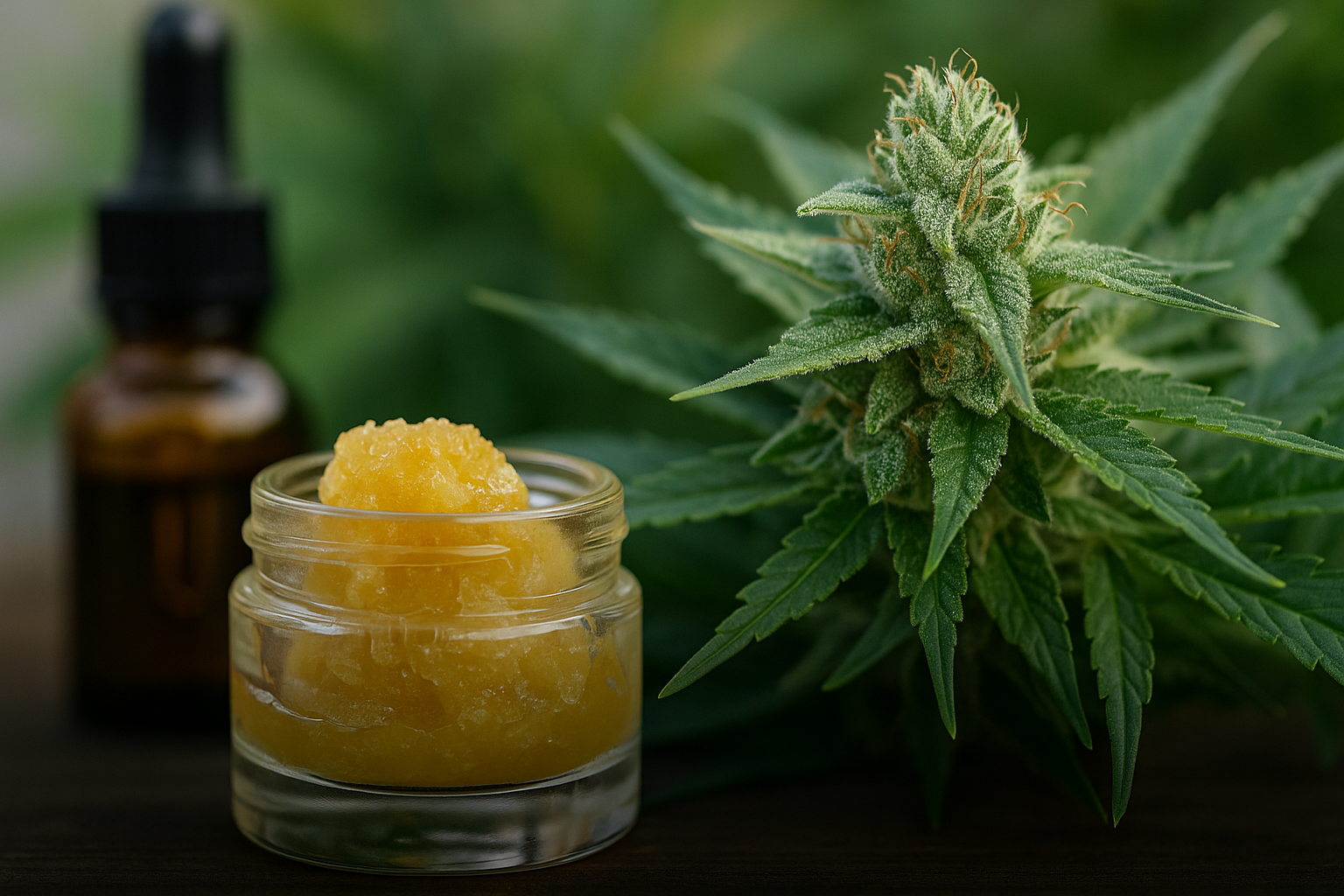
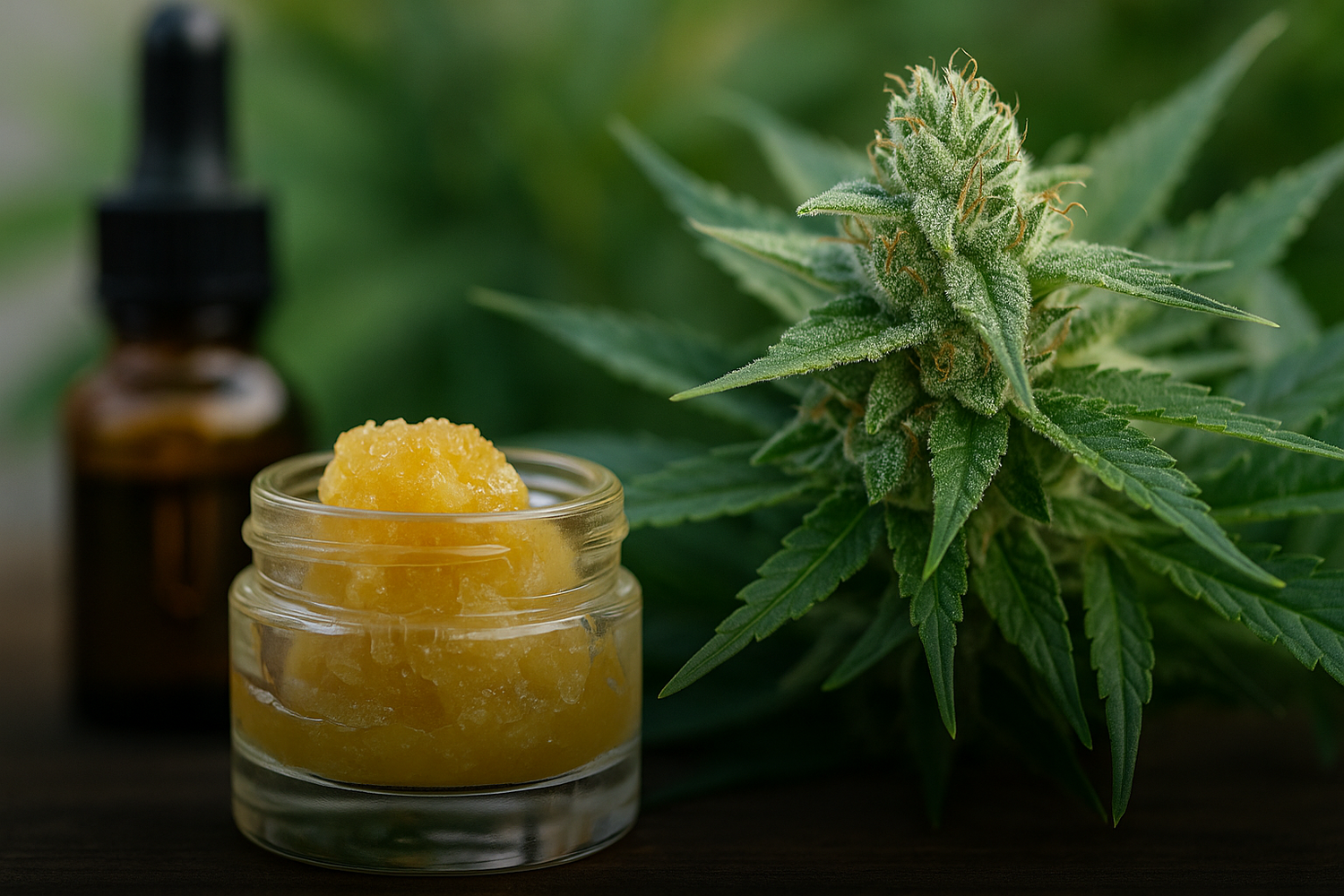
At Iberohemp, we know that quality, traceability and product information make a difference in the world of hemp. In this article, we explore what CBD live resin is, how it is produced, what kind of aromatic profile it has and which criteria should be considered when assessing its quality.
Throughout the following sections, we will look at its main characteristics, the technical aspects of its production, its differences compared with other extracts and the importance of laboratory testing. The aim is to help you better understand this type of concentrate and compare it with other hemp-derived products in an informed way.
From plant to concentrate: how CBD live resin is produced
The process associated with live resin starts with freshly harvested plant material that is rapidly frozen rather than first undergoing the usual drying and curing processes.
This is one of the main differences between live resin and other types of extracts. Freezing the plant material is intended to limit the loss of certain volatile compounds, particularly terpenes, which can be altered during drying, storage and handling.
The frozen material is then processed using professional extraction and purification systems suitable for this type of concentrate. The exact procedure may vary between manufacturers and must be carried out in facilities specifically equipped to work with the equipment and substances involved.
The importance of fresh plant material
The freshness of the plant material is one of the fundamental characteristics of live resin.
After harvesting, the flowers and other selected parts of the plant are rapidly frozen to help preserve certain components found in the original material.
This process helps reduce the transformations that occur during traditional drying and curing stages. As a result, the concentrate may have a different terpene profile from extracts produced using plant material that has previously been dried or cured.
This does not necessarily mean that live resin is of higher quality than any other extract. Final quality also depends on the raw material, the process used, storage conditions, composition and the controls carried out on each batch.
Key stages of cold processing
In general terms, live resin production involves several professional stages.
First, the freshly harvested plant material is rapidly frozen and kept at a low temperature until processing.
Extraction is then carried out using specialised equipment. In hydrocarbon-based methods, substances such as butane or propane may be used within closed-loop systems specifically designed for this type of process.
After extraction, the necessary stages are carried out to separate the substances used during the process and obtain the final concentrate.
The specific conditions, equipment, temperatures and procedures depend on the system used and should be handled by professional facilities operating in accordance with the relevant safety protocols and controls.
Composition and aromatic profile of live resin
One of the main characteristics associated with live resin is its profile of aromatic compounds, particularly the terpenes originally present in the plant material.
Using freshly harvested and frozen material is intended to preserve a greater representation of the original aromatic profile compared with certain processes that use previously dried and cured plant material.
The final composition, however, can vary considerably depending on the hemp variety, raw material, extraction system, subsequent processing and storage conditions.
Key terpenes and their aromatic notes
Terpenes that may be found in different hemp varieties include myrcene, limonene, pinene, caryophyllene and linalool, among many others.
From a strictly aromatic perspective, these compounds are associated with different scent notes. Limonene is commonly associated with citrus profiles; certain pinenes with notes reminiscent of pine; caryophyllene with spicy nuances; and linalool with floral profiles.
Terpene composition is not identical in every live resin. It depends primarily on the plant material used and the process applied.
For this reason, a laboratory analysis of the batch provides much more precise information than general aromatic descriptions.
Sensory differences compared with other extracts
The main difference between live resin and many conventional extracts lies in the condition of the plant material used before extraction.
While many concentrates are produced from flowers that have previously been dried or cured, live resin is generally made from fresh plant material that has been frozen shortly after harvesting.
The term BHO, meanwhile, generally refers to extracts produced using butane. Therefore, live resin and BHO are not necessarily opposing categories: some live resin products may be produced using hydrocarbon-based extraction systems.
Distillates are another type of product. Their processing is intended to concentrate specific components, and their composition may differ considerably from that of live resin.
Therefore, rather than considering one format better than another, it is advisable to assess its composition, traceability, analysis and specific characteristics.
Physical characteristics and quality criteria
The appearance of a concentrate can provide information about its characteristics, although colour or texture alone cannot determine its quality or purity.
Different processing methods can result in different consistencies and shades. To objectively determine the composition of a product, it is necessary to refer to information provided by the manufacturer and, in particular, the relevant laboratory analyses.
Texture, colour and consistency
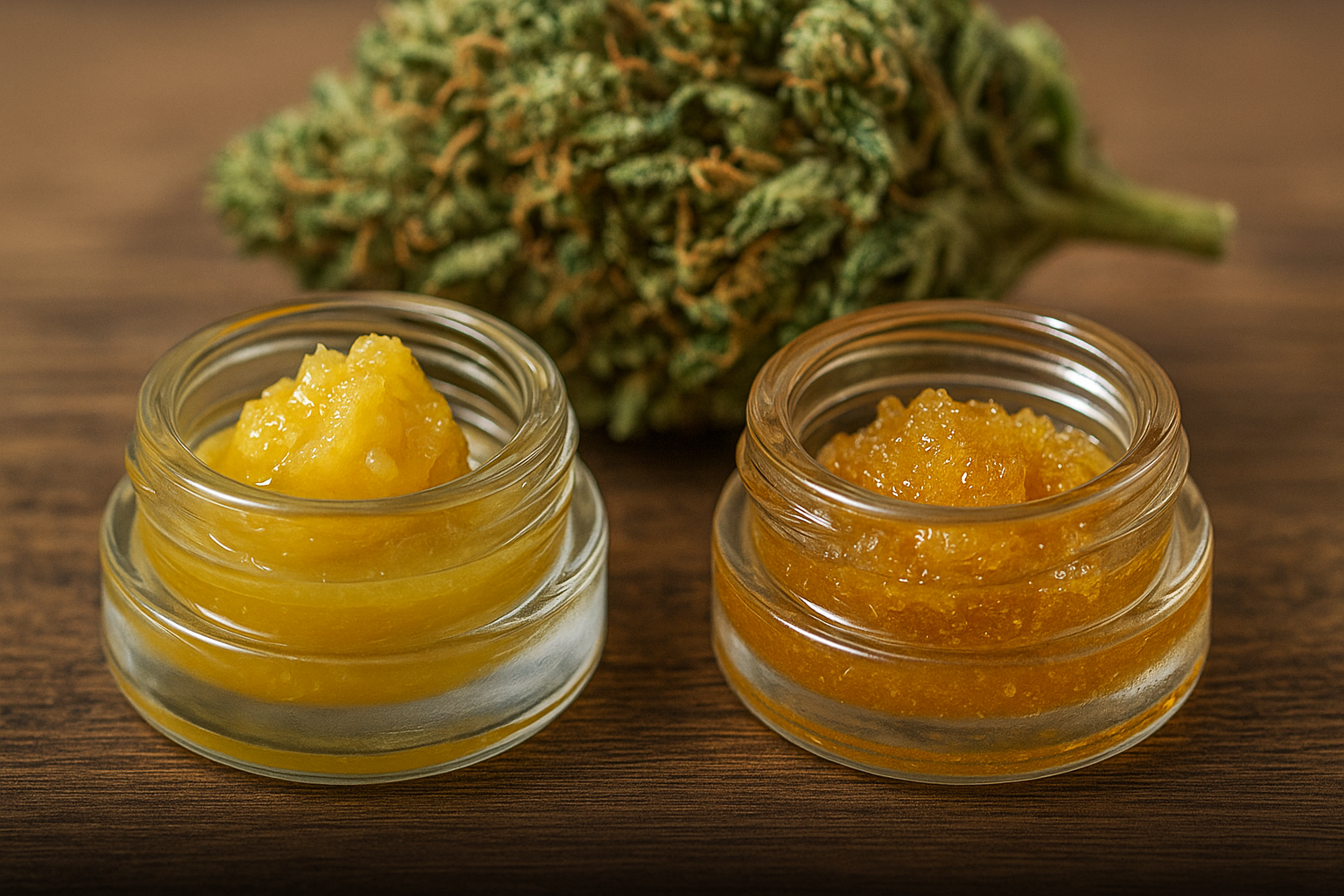
Concentrates with different textures are available on the market and may be sold under commercial terms such as sauce, badder, sugar or diamonds, among others.
These terms generally describe physical characteristics or specific structures of the concentrate, but their meaning may vary depending on the manufacturer and market.
Likewise, colour can range across different shades of yellow, gold or amber depending on the raw material and processing method.
For this reason, a particular texture or colour is not, by itself, a guarantee of quality.
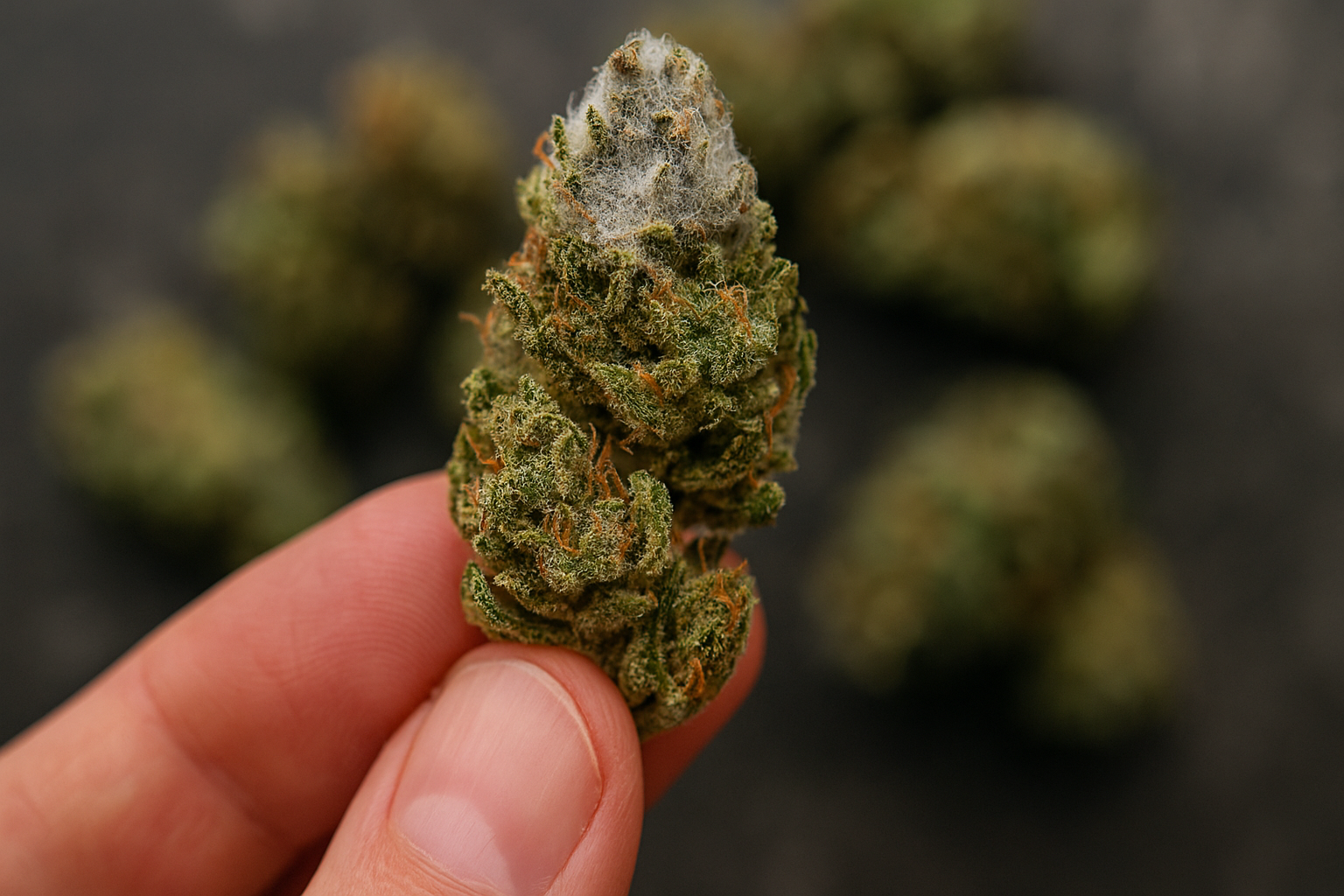
The presence of foreign particles, visible contamination or unusual alterations should, however, be considered a reason to review the product and its documentation.
Purity parameters and laboratory testing
Certificates of Analysis are one of the most useful tools for understanding the composition of a concentrate.
Depending on the product and the scope of the analysis, a laboratory may examine aspects such as:
- Cannabinoid profile.
- Terpene profile.
- Residues of solvents used during extraction, where applicable.
- Heavy metals.
- Microbiological contamination.
- Other parameters relevant to that type of sample.
It is important to check not only whether a certificate exists, but also which batch it covers, which laboratory issued it, when the test was carried out and which parameters were assessed.
When reference is made to a laboratory's accreditation, it is also advisable to check the specific scope of that accreditation.
ISO/IEC 17025:2017 sets out requirements relating to the competence, impartiality and consistent operation of testing and calibration laboratories.
Extraction methods and available formats
There are different procedures for obtaining hemp and cannabis extracts, and not all concentrates obtained using these systems should automatically be considered live resin.
The term is particularly associated with the use of fresh frozen plant material and the aim of preserving certain components present in the plant before drying and curing.
Understanding these differences helps to correctly interpret the information provided by each manufacturer.
Butane, propane and other extraction systems
Butane and propane are among the hydrocarbons professionally used for certain extraction processes.
Their use requires specific equipment, suitable facilities and strict safety measures due to the characteristics of these substances.
There are also extraction procedures based on CO₂ or ethanol, although using one of these systems does not automatically make the resulting product live resin.
Each method can produce extracts with different compositions and characteristics. Therefore, rather than considering one solvent universally superior to another, it is advisable to assess the raw material, process, final composition and laboratory controls of the product.
Formats on the market: slabs, diamonds and sauces
Different terms relating to appearance or consistency can be found on the concentrate market.
Slabs generally describe concentrates presented in relatively flat or solid structures.
Diamonds refer to crystalline formations of certain cannabinoids within some concentrates, although their exact composition should be verified through the relevant labelling and analyses.
Sauces generally have a more fluid consistency and may contain a significant proportion of aromatic compounds.
These terms do not determine the composition or quality of a product on their own. Two products with a similar appearance may have very different chemical profiles.
Key factors when assessing CBD live resin
When assessing live resin, it is particularly important to pay attention to labelling, traceability, composition and available analyses.
Transparency regarding the origin of the plant material, the production system and the controls carried out makes a more objective assessment possible.
It is also advisable to compare the format, quantity and characteristics of the product when assessing its value for money.
Labelling, analysis and traceability
Clear labelling should make it possible to correctly identify the product and provide the information required according to its category and the market in which it is sold.
Where cannabinoid information is provided, it is advisable to verify it through analyses corresponding to the specific batch.
Particular attention should also be paid to claims relating to THC content.
The 0.3% THC threshold appears in European legislation in specific contexts relating, among other matters, to certain hemp varieties and their cultivation under the Common Agricultural Policy. It should not automatically be interpreted as a general authorisation to market any finished product containing less than 0.3% THC.
The regulatory status of a concentrate also depends on its category, composition, presentation, intended purpose and the legislation applicable in each market.
With regard to certifications, a reference such as ISO/IEC 17025 relates to the competence of testing and calibration laboratories; it is not, in itself, a quality certification for the product analysed.
Value for money and comparison with other products
The value for money of a concentrate should not be assessed solely on the basis of its appearance or commercial terms such as “premium”.
It is advisable to compare quantity, declared composition, traceability, batch documentation and available analyses.
To discover other hemp-derived formats, you can browse our premium CBD flower collection, explore our CBD hash category or visit the Iberohemp homepage.
These formats have different characteristics and production processes, so comparisons should take into account the specific nature and composition of each product.
Frequently asked questions about CBD live resin
What distinguishes live resin from other extracts?
One of its main characteristics is that it is produced from fresh plant material frozen shortly after harvesting, avoiding the prior drying and curing normally used in other processes.
This technique aims to preserve a greater representation of certain volatile compounds originally present in the plant.
Is the production process safe?
Safety depends on the extraction being carried out using appropriate equipment, properly equipped facilities and professional control procedures.
Methods using hydrocarbons or other solvents require specific safety measures and subsequent controls to check, among other relevant parameters, for possible residues associated with the process.
For this reason, this type of extraction should only be carried out in professional facilities specifically equipped for the purpose.
How should Certificates of Analysis be interpreted?
It is advisable to check that the certificate corresponds to the same batch as the product and to review which parameters have been analysed.
The information provided may include the cannabinoid profile, certain terpenes, residual solvents where applicable, heavy metals or other controls.
It is also important to identify the laboratory responsible for the test and the scope of its accreditation, where accreditation is mentioned.
A Certificate of Analysis provides information about the parameters tested in a specific sample, but it should always be interpreted in the context of its scope and methodology.
What you need to know about CBD live resin
CBD live resin is a type of concentrate primarily characterised by the use of fresh frozen plant material, rather than raw material that has previously undergone a conventional drying and curing process.
This process aims to better preserve certain volatile compounds found in the plant and can result in aromatic profiles and compositions that differ from those of other extracts.
However, terms such as live resin, sauce, diamonds or premium are not enough to determine the quality of a product.
To assess it properly, it is advisable to review its origin, composition, traceability, labelling and Certificates of Analysis, paying particular attention to whether the documentation actually corresponds to the batch being assessed.
Understanding these characteristics makes it possible to compare live resin with other hemp-derived products from an informative, technical and evidence-based perspective.


Leave a comment
This site is protected by hCaptcha and the hCaptcha Privacy Policy and Terms of Service apply.