

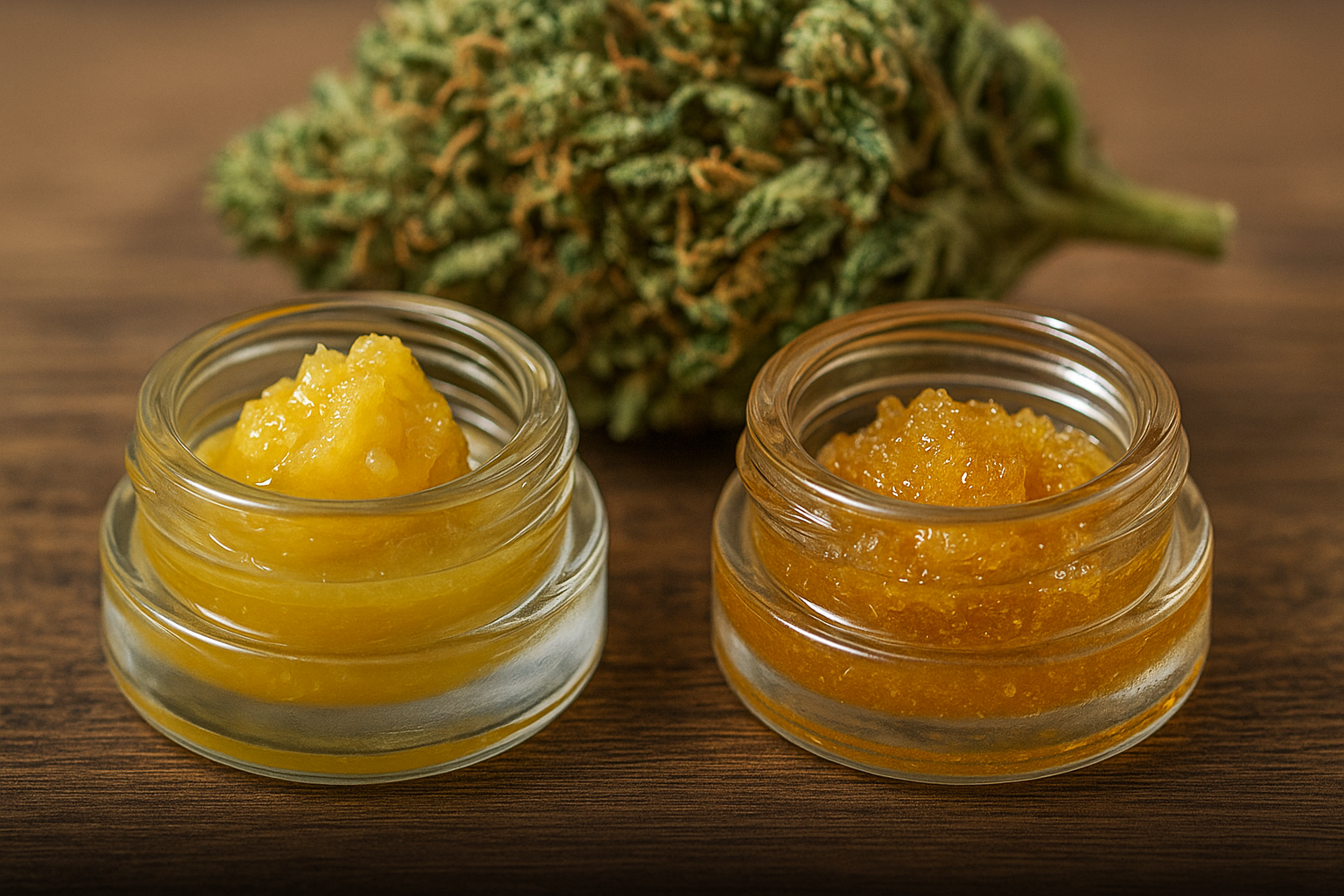
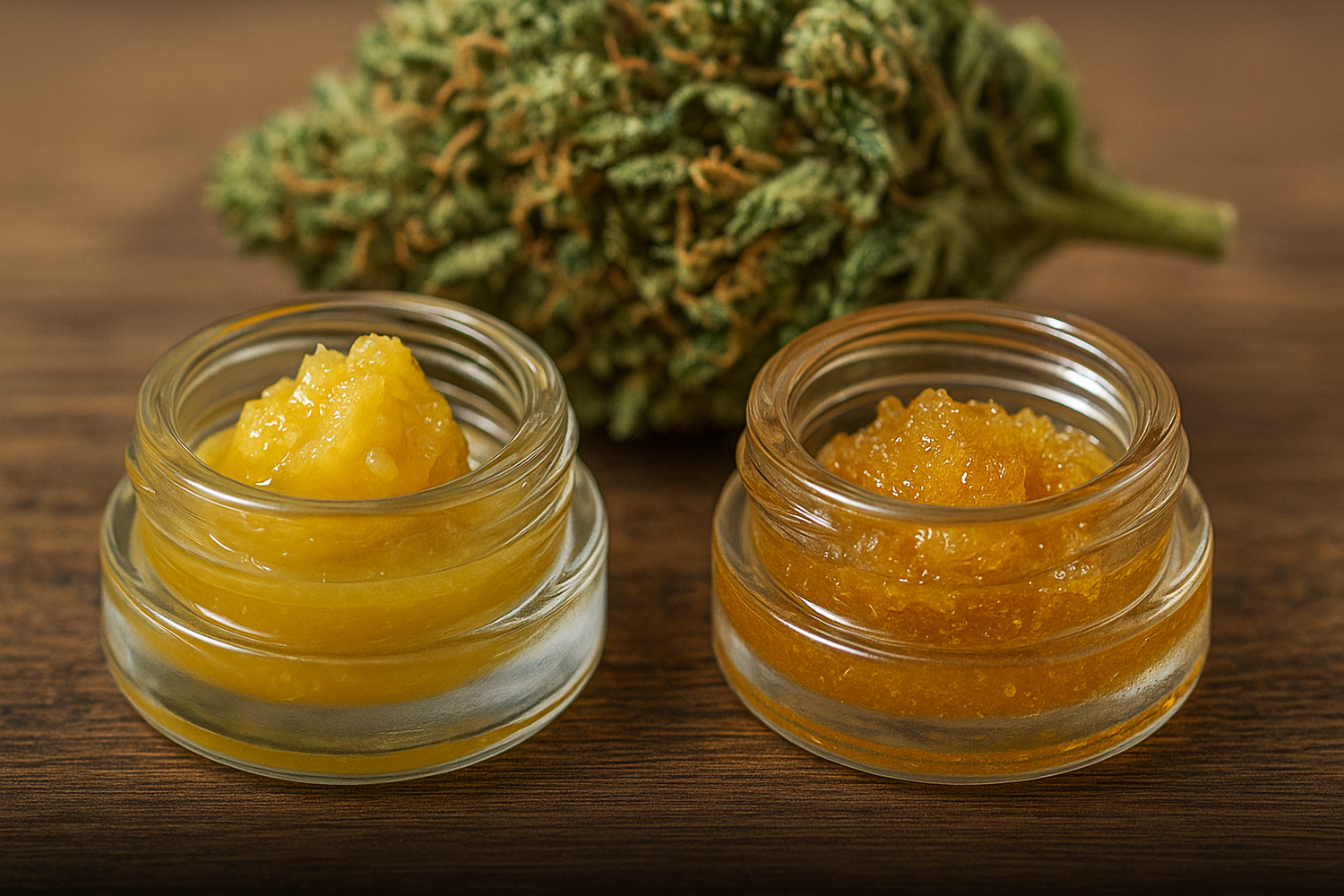
In the world of hemp and CBD derivatives, understanding the differences between live rosin and live resin makes it easier to distinguish between two types of concentrates that, although they may start from similar raw materials, are produced using different processes.
In this guide, we compare how they are produced, how their extraction methods differ, how their aromatic profiles may vary, and which aspects should be considered when choosing a product. We will also look at how they relate to other hemp-derived formats, such as CBD flowers, hash, and oils.
Essential Concepts of CBD Live Rosin and Live Resin
The terms live rosin and live resin refer to concentrates made from fresh plant material that has not undergone the conventional drying and curing process. The plant material is usually frozen shortly after harvest to better preserve certain volatile compounds.
In fact, the term “live” refers specifically to the use of fresh or fresh-frozen plant material as the starting point. This characteristic can apply to both live rosin and live resin.
The fundamental difference lies in how the extraction is subsequently carried out: live rosin is obtained through mechanical, solventless processes, while live resin is produced through solvent-based extraction.
Live Rosin: Origin and Characteristics
Live rosin is a concentrate obtained without using solvents during extraction. Its production is primarily based on the controlled application of pressure and temperature to the relevant material.
In some production methods, fresh-frozen material is first processed to separate the trichomes and obtain hash, which is then pressed.
Its main distinguishing characteristic is therefore its mechanical, solventless extraction method.
The final product may display different colours, consistencies, and aromatic characteristics depending on factors such as the raw material, temperature, pressure, filtration, and post-processing.
It should not be assumed that this process automatically removes all waxes, lipids, or other plant components. The final composition will depend on the starting material and the specific process used.
Live Resin: Origin and Characteristics
Live resin also uses fresh or fresh-frozen plant material, but its production process is based on solvent extraction. Solvents that may be used include hydrocarbons such as butane or propane, as well as other extraction systems.
Therefore, it is not accurate to state that live resin is generally produced using CO₂. The term live resin does not refer to a single solvent, but rather to a type of concentrate whose starting material has not undergone conventional drying and curing and whose extraction involves solvents.
After extraction, the process must include the appropriate stages to remove the solvent used and obtain the final product.
Live Rosin vs Live Resin: Extraction Process and Purity
The main difference between live rosin and live resin lies in the extraction method.
While live rosin does not use extraction solvents, live resin relies on a solvent-based process and therefore requires equipment and controls suited to the system being used.
This does not mean that live rosin can automatically be described as “purer” than live resin. The purity and composition of a concentrate should be assessed by considering the raw material, production process and, especially, the analytical results for the product.
Solventless Extraction vs Solvent-Based Extraction
In simple terms, live rosin uses pressure and temperature to obtain the concentrate, without introducing a solvent during this stage.
Live resin uses a solvent to separate certain components from the plant material. Different substances and technologies may be used depending on the process.
This difference has implications for the equipment, yield, and subsequent production stages.
Rather than establishing that one system is necessarily better than the other, it is more accurate to regard them as two technically different methods for producing concentrates.
Quality Control and Preservation of Aromatic Compounds
Temperature, processing time, storage, and the characteristics of the raw material can influence the aromatic composition of the final product.
Terpenes are volatile compounds, so controlling these variables is particularly relevant when seeking to preserve the aromatic characteristics of the plant material.
In addition, traceability and laboratory testing are important elements when assessing a concentrate, especially for products obtained through solvent extraction.
Laboratory analysis provides specific information about a batch and is much more reliable than assessing quality solely on appearance or commercial terminology.
Terpene and Cannabinoid Profile: Aromatic Characteristics
Terpenes are compounds naturally present in Cannabis sativa and many other plant species. Some of them contribute to the characteristic aromatic profile of different varieties.
However, the aroma of hemp does not depend exclusively on terpenes. Research has also identified other minor volatile compounds that may make an important contribution to certain aromatic profiles.
Both live rosin and live resin can have different compositions depending on genetics, raw material, extraction method, and storage conditions.
Therefore, there is no universal rule stating that live rosin or live resin will always have a particular aroma or a specific terpene concentration.
Main Terpenes and Their Aromatic Notes
Terpenes commonly identified in Cannabis sativa include myrcene, limonene, pinene, linalool, and beta-caryophyllene, among others.
From a strictly aromatic perspective, they may be associated with notes such as:
- Myrcene: earthy, herbal, and musky notes.
- Limonene: citrus notes reminiscent of lemon and orange.
- Pinene: resinous notes characteristic of conifers.
- Linalool: predominantly floral profile.
- Beta-caryophyllene: spicy and earthy notes reminiscent of pepper or cloves.
These descriptions refer exclusively to aromatic characteristics, without attributing therapeutic, medical, or wellness effects to these compounds.
Do Live Rosin and Live Resin Have Different Aromas?
It would not be accurate to state that live rosin always provides one type of aroma and live resin another.
Two concentrates produced using the same process may have very different aromatic profiles if they come from different varieties. Even similar terpene concentrations do not necessarily explain all the aromatic differences observed between varieties.
For this reason, a more precise comparison should consider the analytical profile and batch-specific information, rather than relying solely on the live rosin or live resin designation.
Price and Availability: Factors That Influence Cost
The price of a hemp-derived concentrate can depend on numerous factors, including the quality and quantity of raw material, extraction yield, method used, production scale, and quality controls.
Live rosin production may require a considerable amount of raw material and several processing stages. For this reason, live rosin is often found in higher price segments than certain solvent-extracted concentrates.
However, there is no universal price range for live rosin and live resin. The final price depends on the market, producer, raw material, format, and specific characteristics of each product.
What Determines the Price?
The main factors that can influence price include:
- Quality of the starting plant material.
- Quantity of raw material required.
- Extraction yield.
- Production method used.
- Post-processing.
- Testing and quality controls.
- Product format and quantity.
Therefore, comparing only the price per package may provide an incomplete picture of the differences between two concentrates.
What to Check Before Buying
When comparing hemp-derived products, it is advisable to review the origin, composition, traceability, and documentation available for each batch.
It is also worth checking whether laboratory analyses are available to provide information about the product's composition and other relevant parameters.
At Iberohemp, you can explore different categories of hemp-derived products together with the information available for each product.
Guide to Choosing Between CBD Live Rosin and Live Resin for Your Project
The choice between the two formats will mainly depend on the type of product required, the extraction method, aromatic characteristics, available documentation, and the specific requirements of the project.
For industrial, cosmetic, or aromatic applications, it will also be necessary to verify that the characteristics of the ingredient are compatible with the intended formulation and the regulations applicable to the final product.
Key Factors to Consider
Before comparing live rosin and live resin, consider:
- Origin and characteristics of the hemp used.
- Extraction method.
- Declared cannabinoid profile.
- Available terpene profile.
- Laboratory analyses.
- Appearance and consistency of the product.
- Batch traceability.
- Intended purpose and commercial presentation.
A certificate of analysis can provide particularly useful information about the specific composition of the batch tested and allows comparisons to be made based on data.
Tips for an Informed Purchase
It is advisable to check the information provided by the manufacturer or distributor and not assess a concentrate solely on commercial terms such as “premium” or similar labels.
Product documentation, traceability, and analytical results provide more objective criteria for understanding its characteristics.
It is also important to clarify a common statement concerning THC: 0.3% should not be presented as a general limit automatically applicable to every finished CBD product in the European Union.
The European Commission refers to the 0.3% threshold in specific provisions related, among other matters, to certain cultivation requirements under the Common Agricultural Policy and the import of certain categories of hemp and hemp seeds. Member States may also establish more restrictive rules.
Therefore, it is not accurate to state generally that a CBD live rosin or live resin simply needs to contain “less than 0.3% THC” to determine its legal compliance.
Applications in the Hemp and CBD Industry
Hemp concentrates and extracts can be used as raw materials in different industrial developments, always depending on their composition, technical characteristics, intended purpose, and the regulations applicable to the final product.
The choice of extract may be influenced by factors such as consistency, aromatic composition, stability, or compatibility with other ingredients.
Product Formulation and Development
In formulation projects, the choice between different extracts should be based on technical and documentary criteria, rather than solely on their commercial designation.
When aromatic characteristics are relevant to a particular development, information about the terpene profile and other volatile compounds can help provide a better understanding of the raw material.
Likewise, information about cannabinoids, composition, and batch traceability allows for a more comprehensive assessment.
Potential Applications in Finished Products
Depending on their composition, formulation, and compliance with the relevant regulations, hemp derivatives may be used in various cosmetic, aromatic, or technical developments.
It should not be assumed that every extract is suitable for every application. The intended use and legal requirements must be assessed specifically for each finished product.
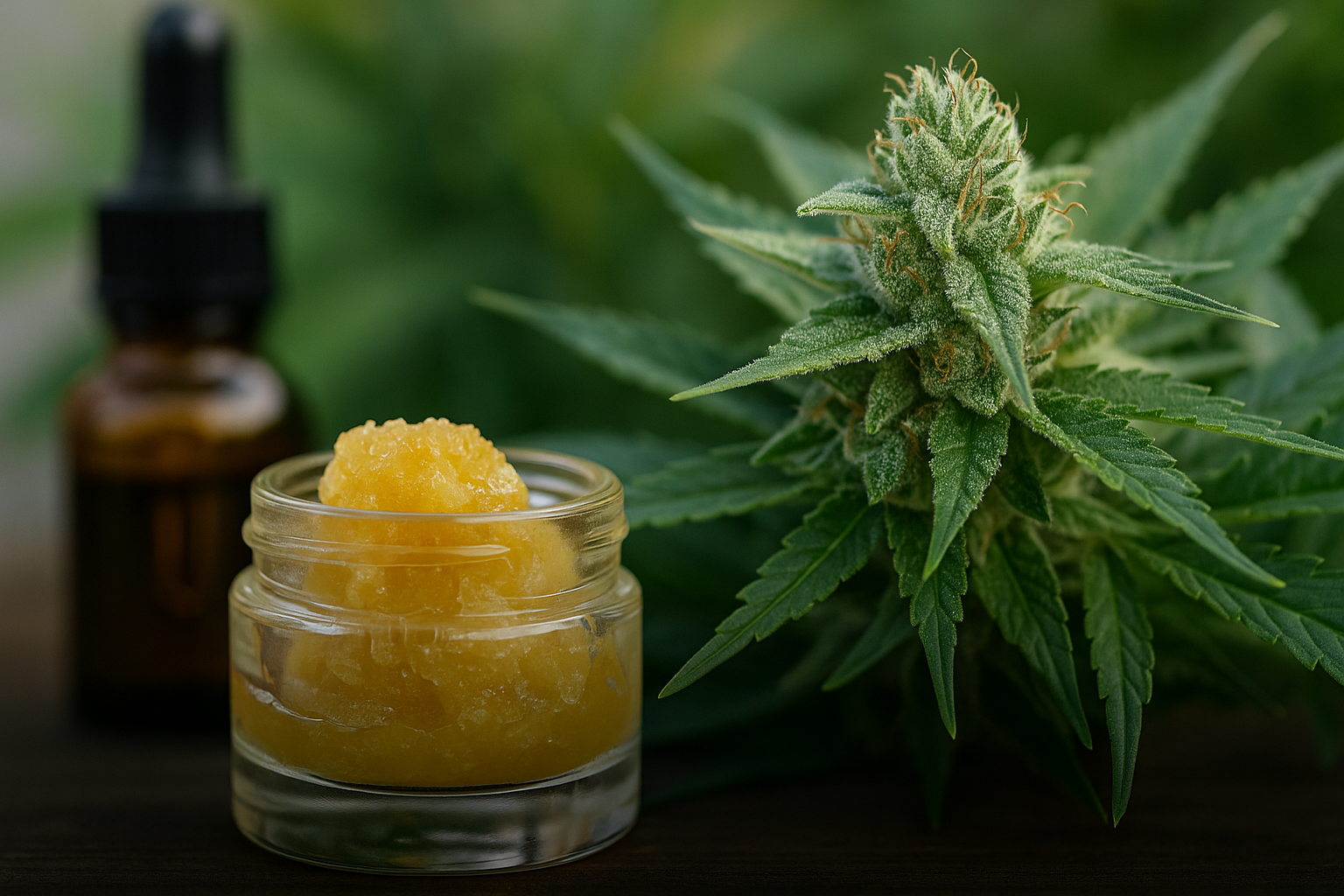
To explore another format within this category, you can also view Iberohemp CBD oils.
Live Rosin vs Live Resin: Conclusions and Main Differences
When comparing live rosin vs live resin, the fundamental difference lies in the production method: live rosin is produced without extraction solvents, primarily using pressure and temperature, while live resin is obtained using solvents. Both can be made from fresh-frozen plant material.
Beyond this difference, the characteristics of each concentrate depend on the raw material, the process used, its composition, storage conditions, and quality controls.
Therefore, there is no universally better option between live rosin and live resin. The choice should be based on the specific characteristics and intended purpose of the product, paying particular attention to traceability, laboratory analyses, and available documentation.


Leave a comment
This site is protected by hCaptcha and the hCaptcha Privacy Policy and Terms of Service apply.