

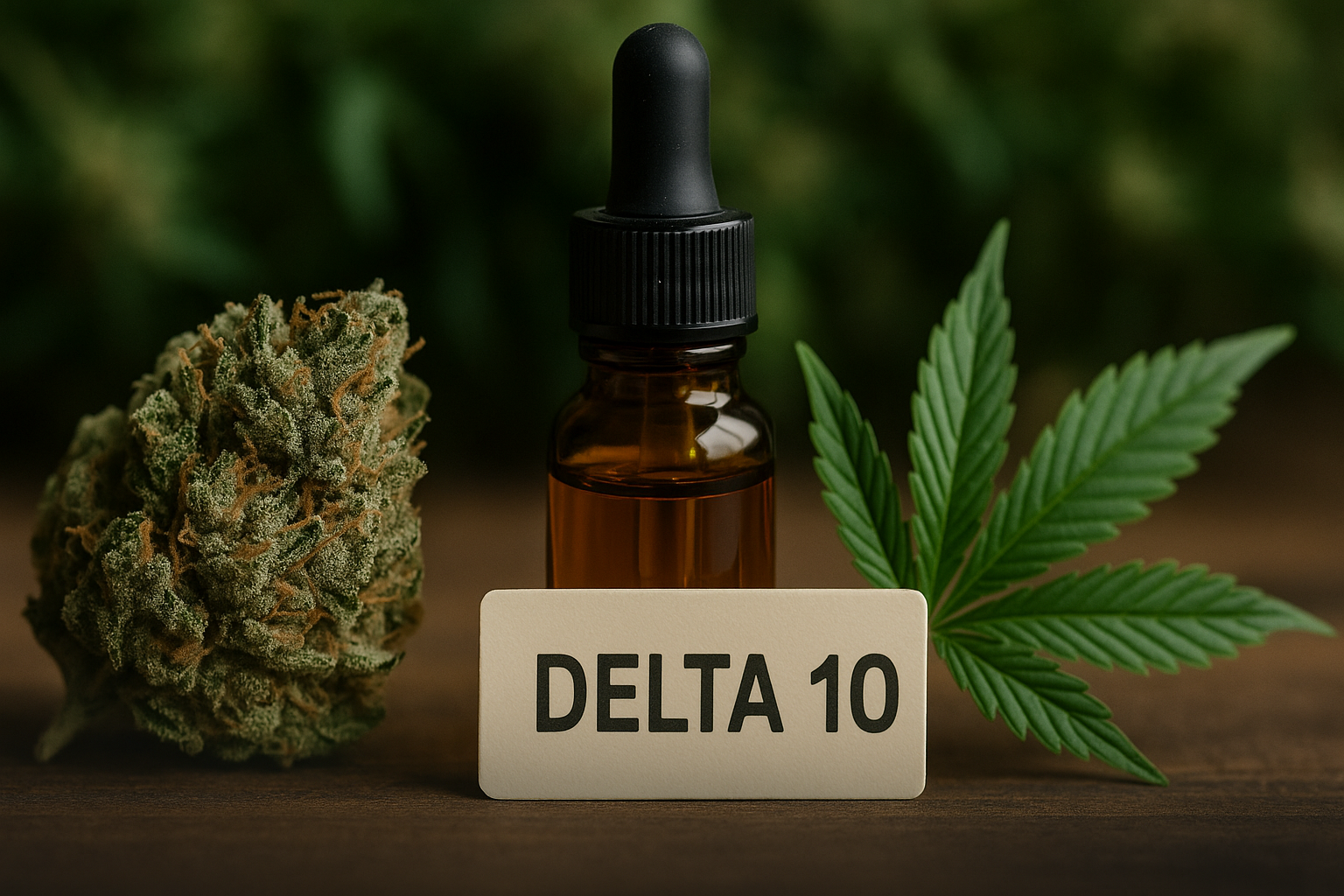
At Iberohemp, we explore what Delta 10 is, a cannabis isomer that is gaining popularity for its unique profile. This compound is found in very low concentrations in the plant, but thanks to advanced processes it can be obtained with high purity standards. On our website, we offer clear information that perfectly answers “what is Delta 10” and makes it easier to discover quality CBD products. Dive into this article to learn about its origin, mode of action, regulation and uses in the market, and discover our range of CBD flowers and oils.
Origins and extraction process of Delta 10
Delta 10 is mainly extracted from hemp varieties rich in cannabidiol (CBD), by subjecting the extract to specific chemical reactions that transform part of that CBD into the desired isomer. Unlike Delta 9 production, regulatory compliance and traceability guarantee a product with THC below 0.3%. This technical and controlled approach supports the authority of those looking for reliable information about Delta 10 and reinforces the reader’s confidence in the quality of our processes.
Raw material and comparison with other cannabinoids
To truly understand what Delta 10 is, it is essential to understand the raw material. It starts from certified industrial hemp, the same source used for Delta 8 and Delta 9, but with different isomerisation methods. While Delta 9 is naturally abundant, Delta 10 appears only in minimal traces, so its production requires strict control of variables such as temperature and pH. The result is a unique organoleptic and chemical profile, standing apart from other cannabinoids in purity and emerging character.
Isolation methods and quality standards
To understand what Delta 10 is, it is also necessary to ask “how Delta 10 is produced”. Delta 10 isolation is carried out using chromatographic column techniques and fractional distillation, following certified protocols to separate each isomer. The use of high-purity solvents and the calibration of analytical equipment guarantee a stable and reproducible result. Each batch undergoes external laboratory testing to verify its concentration and rule out contaminants. This commitment to transparency and control reinforces the authority of those seeking technical information about Delta 10 and strengthens user confidence in the reliability of our products.
Chemical characteristics and mode of action of Delta 10
Taking a closer look at what Delta 10 is means understanding its interaction with the endocannabinoid system. At the molecular level, this isomer has a double bond in the tenth position of the ring, which modifies its affinity for CB1 and CB2 receptors. Its mode of action, still under study, suggests a more moderate activation compared with Delta 9. We can say that this profile makes it an interesting alternative for those looking for different experiences within the world of CBD and CBD flowers, while always respecting the regulation of THC below 0.3%.
Molecular structure compared with Delta 8 and Delta 9
The structure of Delta 10 differs subtly from that of Delta 8 and Delta 9 in the position of the double bond in the carbon ring. This detail gives each isomer unique properties in its interaction with endocannabinoid receptors. While Delta 8 is described as having a softer sensation and Delta 9 is the best known, Delta 10 offers an intermediate balance as a result of this structural difference. Understanding these nuances allows those wondering “what is Delta 10” to appreciate its uniqueness and make informed choices.
What is Delta 10: legal profile and current regulations
In Spain and Europe, the commercialisation of Delta 10 falls under the same regulation as other hemp derivatives. This legal condition makes Delta 10 suitable for distribution, provided it comes from authorised varieties. The question of “what is Delta 10” often overlaps with doubts about its legal status; therefore, we always recommend checking the certificates of analysis and traceability available for each product. This ensures full compliance with current regulations and consumer peace of mind.
Popular uses and applications of Delta 10 in the market
There is currently growing demand for formats adapted to different tastes and habits. Consumers are currently exploring Delta 10 in liquid extracts and concentrates that easily integrate this isomer. Its flexibility of use without infringing legislation on THC below 0.3% has boosted its presence in the market. If you are looking to experiment with new sensations while maintaining quality and safety, discover our selection of CBD flowers, hash and oils designed to incorporate Delta 10 easily into your routine.
Available formats and buying recommendations
Delta 10 can be found in different formats on the market, the most common being vaporiser cartridges, disposable vape-type products, distillates and some infused edibles. There are also formulations in the form of tinctures or blends with other cannabinoids to modulate their effects.
When choosing a product with Delta 10, it is important to always review the laboratory analysis certifying its composition and purity, as this is a cannabinoid usually obtained through conversion processes. Verifying the actual percentage of Delta 10, the absence of contaminants and the origin of the extract helps make a more informed and safer decision.
Key factors when choosing Delta 10 products
When considering the purchase of Delta 10 products, it is worth assessing brand transparency, extract purity and the origin of the raw material. Always prioritise products with laboratory certificates and the absence of contaminants. Clear information about the extraction method and spectrum type, full or broad, reinforces trust. Our commitment to quality ensures that each package displays precise data, helping you make safe decisions and enjoy Delta 10 in its most refined expression.
Myths and realities about Delta 10
There are many myths in the cannabinoid universe, and Delta 10 is no exception. This isomer is often associated with extreme effects or miraculous properties without scientific basis. The reality is that Delta 10 has a moderate and well-defined profile, resulting from its structure and purity. Understanding what Delta 10 is allows you to distinguish between exaggerated marketing and verified data, avoiding unrealistic expectations. Our commitment to transparency and responsible communication helps dispel misconceptions, bringing the CBD experience closer to the informative rigour users deserve.
Distinguishing verified information from speculation
To separate fact from fiction around Delta 10, it is advisable to rely on technical sources and certificates of analysis. Speculation often arises in forums and social media, while verified information is based on laboratory studies and quality control practices.
At Iberohemp, we prioritise official documentation and testing for each batch, offering concrete and accessible results. This way, anyone seeking to understand “what is Delta 10” finds reliable data, avoiding misinformation and supporting purchase decisions based on real evidence.
Frequently asked questions about Delta 10
Below, we answer some of the most common questions about Delta 10. These questions and answers will help you better understand its characteristics, differences compared with other cannabinoids, legal aspects and quality criteria to consider before choosing a product.
How is Delta 10 different from other isomers such as Delta 8 or Delta 9?
Delta 10 is a THC isomer distinguished by its slightly different molecular structure, which influences how it interacts with the endocannabinoid system. Compared with Delta 9, it is usually described as less potent, while compared with Delta 8 it is associated with lighter effects and a profile that many consider more stimulating than relaxing.
Is Delta 10 legal in the European Union?
The legal status of Delta 10 may vary by country, as it depends on both European regulations and national legislation. In general, its legality is usually linked to the final product containing a THC level below the permitted limit, usually 0.2% or 0.3%, depending on the country. Therefore, it is essential to always review local regulations before purchasing it.
How is the purity of Delta 10 certified?
Purity is verified through laboratory analyses carried out by independent third parties. These certificates should detail the full cannabinoid profile, confirm the percentage of Delta 10 present and demonstrate the absence of contaminants such as heavy metals, pesticides or residual solvents. Reviewing these reports is key to ensuring quality and safety.
Which formats are most recommended depending on the consumer profile?
The choice of format depends on previous experience and personal preferences. Vaporisers offer fast and controllable absorption, while edibles provide longer-lasting effects. Tinctures allow more precise dosing. Choosing appropriately involves assessing factors such as desired intensity, speed of effect and ease of use.
Understanding what Delta 10 is means taking into account its chemical basis, legal context and the importance of product quality. Having clear and verified information helps avoid confusion and make more conscious decisions according to individual goals.



Leave a comment
This site is protected by hCaptcha and the hCaptcha Privacy Policy and Terms of Service apply.