


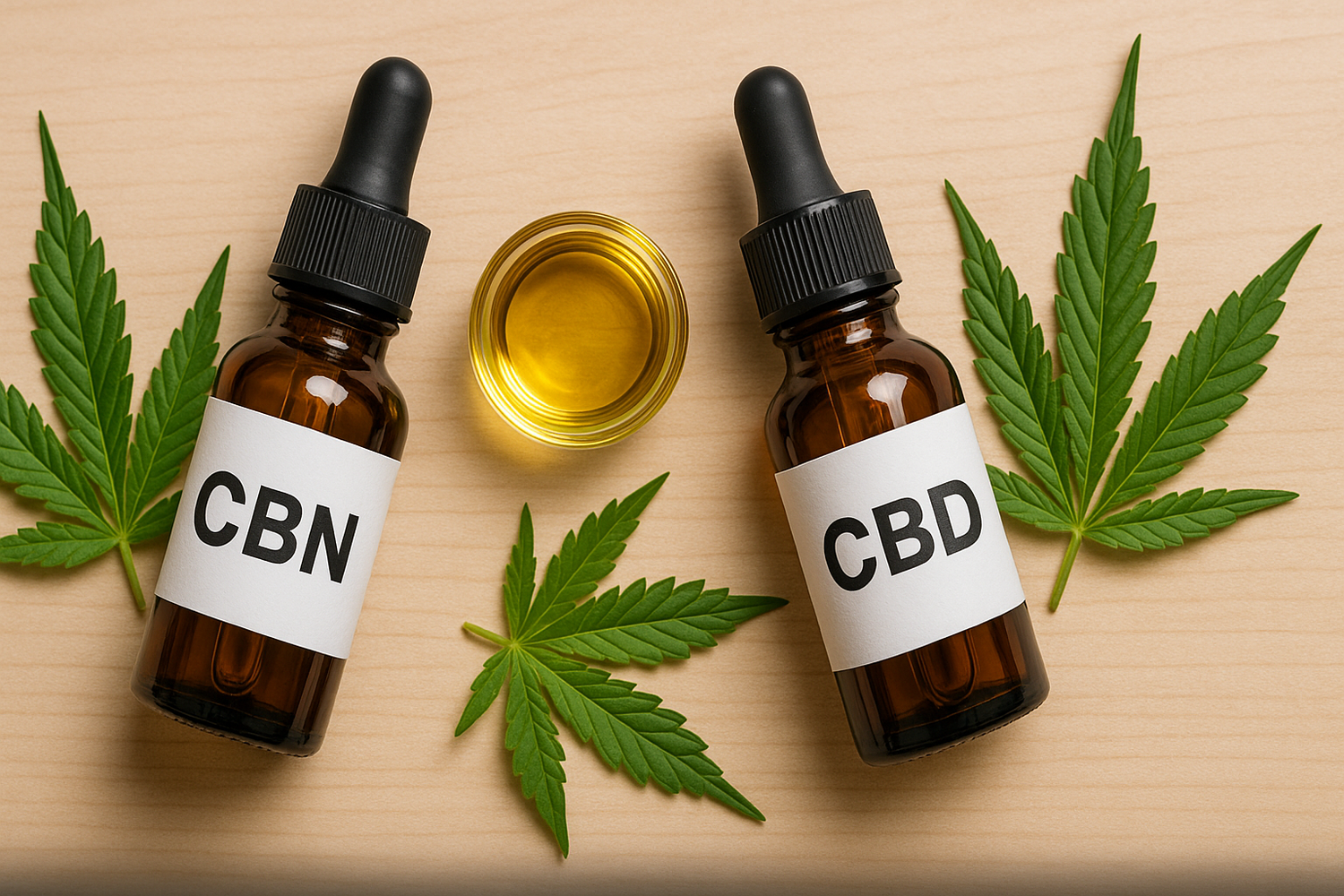
In this article, we explain what CBN is and how it differs from CBD, analysing its characteristics, properties and most common uses. Throughout the text, we will clearly explain the origin of each cannabinoid, their profiles and the main applications attributed to them. At Iberohemp, we believe that properly understanding the particularities of CBN and CBD is essential in order to assess their differences and make more informed decisions.
Understanding the difference between CBN and CBD
The search for “what is CBN” quickly leads to comparisons with CBD. Both compounds come from the hemp plant, but their origin and chemical characteristics differ. While CBD is extracted directly from the plant during the flowering stage, CBN is mainly formed through the oxidative degradation of THC over time. Understanding the difference between CBN and CBD allows us to better assess their various uses and focus our choice according to what we are looking for in each product.
What is CBN? Origins and production process
CBN is a secondary cannabinoid that appears when THC is exposed to oxygen and light. Unlike cannabidiol, CBN is not found in large quantities in freshly harvested flower. Its presence increases with the ageing of plant material and with controlled storage processes. At an industrial level, the answer to the question “what is CBN” would be explained through the extraction techniques used. These are techniques similar to those used for CBD, but with adjusted temperature and pH parameters to favour the selective oxidation of THC. This ensures that the resulting THC level is always below 0.3%, in accordance with current regulations.
Chemical profiles: CBN vs CBD
When analysing the chemical profiles of CBN and CBD, we find that although both are cannabinoids, they have very different structural and purity properties. CBD is usually extracted in high concentrations, which makes it easier to incorporate into oils or creams, while CBN requires controlled oxidation stages to achieve high levels of purity. These processes directly influence the terpene profile and the final cannabinoid concentration, key factors when designing cosmetic formulations and personal care products, which can be complemented with our collection of accessories.
Compared molecular structure
The molecular structure of CBN and CBD shows differences in the arrangement of their aromatic rings. While CBD has a hydroxyl group in the β position, CBN presents an additional carbonylation that gives it greater rigidity. This variation in the side chain and internal bonds influences its interaction with endogenous receptors. Visualising these differences helps explain why both compounds, although similar in origin, show different behaviours in cosmetic formulation processes and lifestyle applications.
Production and purification methods
To separate CBN and CBD effectively, we use high-resolution chromatography and molecular distillation. The first step consists of extraction with supercritical CO2 from plant material, followed by reflux and controlled heating phases to selectively oxidise THC into CBN. Then, washes with cosmetic-grade solvents and fine filtrations are carried out to ensure that the final product has a THC level below 0.3%. This protocol provides transparency and quality, aspects we monitor in every batch of our raw materials.
Common uses and applications of CBN and CBD
As you will have noticed from the beginning of the article, both CBN and CBD have found their place in industries such as cosmetics and personal care. Thanks to their non-psychoactive profile and the guarantee of THC below 0.3%, these molecules can be incorporated into moisturising creams, serums or body oils. In addition, their presence provides a differentiated sensory experience, marked by the reduction of harsh herbal notes and the enhancement of soft aromas, highly valued by those looking for premium formulas.
Applications in cosmetics and personal care
In cosmetics, CBD is a recognised base for facial and body oils, available in our collection of CBD oils. CBN, for its part, adds a softer aromatic nuance and a light texture, ideal for night serums or masks. Incorporating these cannabinoids allows the development of personal care products with differentiated aroma and texture profiles, always respecting the purity and traceability of the ingredient.
Incorporation into lifestyle products
Premium CBD flowers and hemp hash are examples of how cannabinoids can be integrated into daily routines in a practical way and with the necessary quality guarantee. These formats allow versatile use, from preparing infusions to creating homemade cosmetics. Thanks to their balanced terpene profile and the certainty of a THC content below 0.3%, each presentation offers a controlled sensory experience.
Factors to consider when choosing between CBN and CBD
When selecting between CBN and CBD, it is worth evaluating several factors beyond cannabinoid concentration. The origin of the raw material, laboratory tests and the type of extraction make a difference in price and availability. It is also important to know the local legislation regulating permitted THC levels and quality certifications. This way, we can ensure that the product fits perfectly with our expectations and complies with current regulations.
Legislation and regulation
In Europe, industrial hemp must have a THC level below 0.3%. This regulation applies to flowers as well as oils and concentrates. It is essential to verify that each batch has accredited laboratory analyses and that the certificates are publicly available. In this way, we ensure that we align with legal requirements and offer fully transparent products in terms of composition and traceability.
Price and market availability
The complexity of the CBN production process usually makes it more expensive than traditional CBD. However, growing demand is driving economies of scale that may reduce costs. In our online store, we work to balance quality and accessibility, offering different concentrations and formats. This way, each user can choose according to their budget and needs, without sacrificing purity or the guarantee of THC content below 0.3%.
How to identify quality CBN vs CBD products
Recognising a quality product means reviewing the origin of the hemp, the extraction method and the laboratory analyses. The label should clearly state the cannabinoid concentration, the absence of solvents and heavy metals, as well as compliance with THC limits below 0.3%. On our platform, we provide this information on each product page, together with usage recommendations and external test results. In this way, we promote smart and safe purchasing.
Therefore, knowing what CBN is and how it compares with CBD helps us make the most of its qualities in cosmetics, personal care and lifestyle. In turn, it also helps when choosing the best CBN and CBD products. If you would like to explore our premium CBD flowers, CBD oils or hash made to the highest standards, we invite you to visit our online store. There, you can stay informed and discover the new products we continuously add to offer you the latest in hemp formulations.


Leave a comment
This site is protected by hCaptcha and the hCaptcha Privacy Policy and Terms of Service apply.