

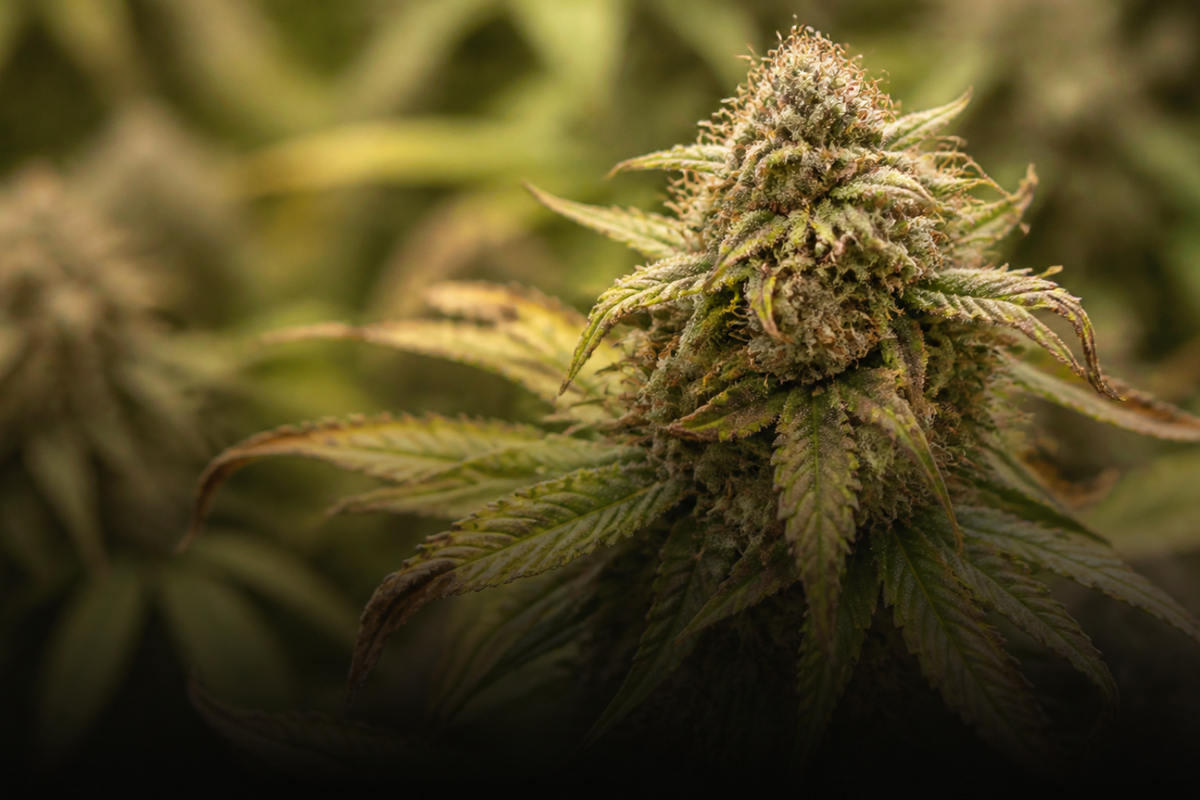
Overripening of cannabis buds occurs when flowers remain on the plant beyond their optimal stage of maturity and begin to undergo age-related changes. The most common signs include dark amber trichomes, dry and retracted pistils, loss of firmness and reduced aroma intensity.
None of these signs alone confirms overripening. However, when several appear together, they may indicate that the flower has passed its optimal stage of maturity.
This phenomenon can occur towards the end of the flowering season, particularly in outdoor crops exposed to autumn rainfall, humidity and temperature fluctuations. In this guide, we explain how to recognise overripe cannabis buds, distinguish them from mould or environmental stress, and understand the factors that influence their preservation.
Understanding these characteristics can also help you better assess the appearance of CBD flowers. Structure, colour, the presence of trichomes and the aromatic profile provide information about the condition of a flower, although they should always be assessed together.
What is cannabis bud overripening and why does it occur?
Hemp flowering goes through several stages. During this process, the plant develops its flowers, increases the presence of trichomes and undergoes changes in its composition. Once it passes its maturity stage, senescence, a natural ageing process, begins, during which certain plant structures start to deteriorate.
It is important to distinguish between three stages that are often confused:
- Ripening: the process during which flowers and their various structures develop.
- Optimal maturity: the stage at which the flower has reached a particular level of development, influenced by genetics and environmental conditions.
- Overripening: the stage at which age-related changes in the flower begin to appear.
A mature flower may have dark pistils and amber trichomes without necessarily being deteriorated. The combination of signs is more important than any individual indicator.
| Stage | Trichomes | Pistils | Structure and aroma |
|---|---|---|---|
| Early flowering | Mostly transparent | Light-coloured and upright | Underdeveloped flower and mild aroma |
| Maturity | Milky and amber trichomes | Darkened and partially retracted | Developed structure and distinct aroma |
| Overripening | Greater presence of dark or deteriorated trichomes | Brown, dry and retracted | Possible loss of firmness and aroma intensity |
These characteristics are indicative and may vary considerably between varieties.
The maturity of a flower also influences its subsequent preservation. Drying and curing cannot reverse degradation processes that have already occurred. If certain aromatic compounds have been lost or trichomes have been damaged, these processes cannot restore their original condition.
Another relevant factor in hemp is that the cannabinoid profile may change throughout flowering.
A study conducted by North Carolina State University using the Cherry Wine and BaOx varieties observed changes in CBD and THC concentrations throughout plant development.
The findings show that flower composition does not remain constant and that its evolution depends on various factors, including genetics and the stage of maturity. You can consult the publication at NC State Extension.
These changes are also relevant from a regulatory perspective, particularly in agricultural and professional activities subject to specific controls.
Signs of overripe cannabis buds: appearance, texture and aroma
The signs of overripening in cannabis buds usually appear gradually and not necessarily at the same time in every flower.
Light exposure, environmental conditions and the characteristics of each variety may influence their development. It is therefore important to recognise the different signs and avoid drawing conclusions based on a single indicator.
Changes in trichome colour and structure
Trichomes are small structures found on the surface of hemp flowers. Glandular trichomes contain resin and are involved in the production and accumulation of various plant compounds.
During their development, they may display different colours:
- Transparent: commonly found during the early stages of development.
- Milky or whitish: associated with trichome development and maturation.
- Amber or brown: potentially associated with ageing and oxidation processes.
One possible sign of overripening is the widespread presence of dark, misshapen trichomes or trichomes with deteriorated glandular heads.
The surface of the flower may also have a less glossy appearance. However, these changes depend on genetics, environmental conditions and the subsequent handling of the flowers.
Therefore, trichome colour should be treated as a general guide rather than definitive proof of maturity.
Pistils, calyxes and flower structure
Pistils are reproductive structures found in female hemp flowers. Their visible parts, known as stigmas, often develop orange or brown tones and retract as maturation progresses.
Overripe flowers may contain dry, dark and brittle stigmas, although these changes may also result from environmental factors such as heat, rainfall or physical contact.
The structures surrounding the flowers may also undergo changes in firmness and appearance during ageing.
Some varieties display a phenomenon known as foxtailing, characterised by the development of small floral extensions on the existing bud structure.
This phenomenon may be associated with genetics or certain environmental conditions and therefore does not constitute a sign of overripening on its own.
Yellowing leaves may also be part of the plant's natural ageing process, although other causes are possible.
Loss of firmness, colour changes and reduced aroma
An overripe flower may have a less firm structure, a duller appearance and changes in texture.
In terms of colour, yellowish, brown or tan tones may appear. However, some varieties naturally display darker colours, so this indicator should be interpreted in light of their original characteristics.
For more information about these differences, you can consult our article on brown and dry CBD buds.
Terpenes are volatile aromatic compounds whose presence may be affected by time, temperature, light exposure and storage conditions.
As a result, an aged flower may have a less intense, flatter or more grassy aroma.
If unusual odours associated with dampness or deterioration appear instead, the possibility of fungal contamination should be considered.
| Sign | Typical characteristics of a mature flower | Possible signs of overripening |
|---|---|---|
| Trichomes | Milky and amber | Dark, misshapen or deteriorated |
| Pistils | Partially darkened | Dry, brown and retracted |
| Flower structure | Developed and well-defined | Possible loss of firmness |
| Leaves | Variable colouring | Age-related yellowing |
| Aroma | Distinct and characteristic | Reduced aroma intensity |
| Texture and colour | Characteristic of the variety | Dull appearance or tan tones |
Overripening, mould or environmental stress: how to tell them apart
Many of the signs mentioned above may have different causes. It is therefore important to distinguish between natural flower ageing, fungal contamination and changes caused by environmental factors.
The distribution of changes and the speed at which they appear can provide useful information about their possible origin.
Mould and botrytis in cannabis buds
Botrytis, caused by the fungus Botrytis cinerea, is one of the fungal diseases that can affect hemp flowers.
Its appearance is associated with certain environmental conditions, particularly high humidity and moisture accumulation within dense plant structures.
Contamination may begin inside the flower and go unnoticed during its early stages.
Possible signs of fungal contamination include:
- White or greyish filaments or fuzzy growth.
- Brown areas with a deteriorated appearance.
- Soft areas or unusual changes in texture.
- Unpleasant odours associated with dampness.
- Localised changes that may spread.
These characteristics help distinguish certain cases of fungal contamination from natural ageing, although the absence of visible signs does not guarantee that a flower is free from contamination.
Heat or light stress
High temperatures and certain lighting conditions can cause changes in the appearance of flowers.
These include premature darkening of the stigmas, changes in colour and the appearance of irregular floral structures.
In these cases, changes may be concentrated in the most exposed areas, while other parts of the plant retain a different appearance.
Nutrient deficiencies and natural ageing
Nutrient deficiencies can also cause colour changes in leaves and other plant structures.
Yellowing may be associated with various factors and should not automatically be interpreted as a sign of overripening.
The distribution of changes and the general condition of the plant help provide a better understanding of their possible origin.
| Problem | How it may appear | Distinguishing characteristics |
|---|---|---|
| Overripening | Gradual ageing | Deteriorated trichomes and reduced aroma intensity |
| Mould or botrytis | Localised or progressive changes | Filaments, changes in texture and unusual odours |
| Environmental stress | Changes in the most exposed areas | Irregular changes in colour and structure |
| Nutrient deficiencies | Changes in leaves and other structures | Variable discolouration patterns |
If fungal contamination is suspected, it is important to separate and discard the affected material, preventing contact with other flowers.
Drying does not guarantee the elimination of microbiological contamination or restore a flower damaged by fungi.
Why do cannabis buds become overripe?
Overripening may be associated with various factors. From the genetic characteristics of the plant to environmental conditions, numerous variables influence flower development.
Differences between hemp varieties
Each variety has its own characteristics and development rate.
The flowering periods commonly associated with a variety are approximate guidelines, as they may be influenced by temperature, lighting and other environmental factors.
Not all hemp varieties mature in the same way or display the same visible changes during ageing.
Incorrect interpretation of pistils
The darkening of pistils is a common feature of flower development, but it may also occur for reasons unrelated to maturation.
Rainfall, heat and other external factors can alter their appearance.
For this reason, assessing the condition of a flower solely on the basis of pistil colour may lead to incorrect conclusions.
The influence of humidity and weather conditions
During autumn, outdoor crops may be exposed to rainfall, lower temperatures and changes in ambient humidity.
These conditions may contribute to the deterioration of plant structures and increase the risk of fungal growth.
It is important to distinguish between changes associated with senescence and those caused by unfavourable environmental conditions.
Insufficient monitoring of flower development
Differences in lighting, the characteristics of individual flowers and natural colour changes can make an objective assessment difficult.
In professional settings, documented monitoring of the different stages of development makes it easier to understand flower development and detect possible changes.
How to prevent deterioration associated with cannabis bud overripening
Preventing deterioration in professional settings involves understanding the characteristics of each variety, controlling environmental conditions and applying quality procedures to the flowers.
Visual observation should be supplemented by analytical testing, particularly when there are specific requirements regarding product composition and quality.
Monitoring flower characteristics
Monitoring flowers makes it possible to identify changes in various characteristics:
- Condition and appearance of trichomes.
- Pistil colour.
- Flower structure and firmness.
- Aroma intensity and aromatic characteristics.
- Presence of possible abnormalities or contamination.
Photographic records and documentation of these characteristics facilitate comparisons and help explain the changes that occur during different stages of development.
Differences in maturity within the same plant
Flowers on the same plant do not always develop completely uniformly.
Their position, exposure to light and environmental differences may influence their development.
This variability explains why the condition of a single flower does not necessarily represent the condition of the entire plant.
In authorised professional activities, these differences are taken into account as part of monitoring and quality control procedures.
The importance of environmental and storage conditions
Humidity, temperature, ventilation and light exposure are factors that may influence the preservation of hemp flowers.
Prolonged exposure to unsuitable conditions may contribute to the degradation of certain aromatic compounds and the deterioration of plant structures.
Professional drying, conditioning and storage procedures should therefore be adapted to the characteristics of the product and incorporate measures to prevent microbiological contamination.
| Factor | Importance for preservation |
|---|---|
| Temperature | May influence the stability of aromatic compounds |
| Humidity | Associated with the risk of microbiological deterioration |
| Ventilation | Influences moisture accumulation |
| Light | Prolonged exposure may contribute to certain degradation processes |
| Handling | May affect the integrity of trichomes and flowers |
Legal framework for hemp cultivation in Spain
In Spain, hemp cultivation is subject to different requirements depending on its intended purpose.
Industrial cultivation exclusively intended for the production of fibre, grain or seeds is subject to specific conditions concerning the varieties used and THC content.
However, cultivation intended to produce cannabis flowers requires the appropriate authorisation from the Spanish Agency of Medicines and Medical Devices (AEMPS), even when low-THC varieties are used.
Compliance with a particular THC threshold does not, in itself, mean that every cultivation activity is authorised.
Further information is available on the official AEMPS website.
What happens when cannabis buds become overripe?
When a flower shows signs of advanced ageing, its appearance, structure and composition may differ from those displayed during its mature stage.
The most common changes are associated with trichome integrity, aroma intensity and flower texture.
Can an overripe flower be restored?
Drying and curing may help preserve certain flower characteristics, but they cannot reverse the ageing process.
Lost terpenes and deteriorated glandular structures cannot be restored to their original condition through these procedures.
Therefore, an overripe flower cannot return to an earlier stage of maturity.
How does overripening affect preservation?
Aged flowers may display differences in moisture content, greater fragility of certain structures and changes in texture.
Handling and storage conditions may also influence their condition.
Appropriate preservation may help limit further deterioration, but it cannot correct changes that have already occurred.
If soft areas, filaments, fuzzy growth or unusual odours are detected, it is important to rule out possible microbiological contamination.
How to assess the condition of a CBD flower
When examining a CBD flower, it is worth paying attention to its general characteristics:
- Trichome integrity and appearance.
- Colour characteristic of the variety.
- Flower structure and texture.
- Aromatic profile.
- Absence of visible abnormalities.
- Available analytical information.
These characteristics provide an indication of its condition, although visual inspection is not a substitute for quality controls or laboratory testing.
Frequently asked questions about overripe cannabis buds
How can I tell if a cannabis bud is overripe?
An overripe bud may display dark or deteriorated trichomes, dry pistils, loss of firmness and reduced aroma intensity.
The simultaneous appearance of several of these characteristics may indicate advanced ageing. However, genetics, environmental conditions and subsequent storage should also be considered.
What percentage of amber trichomes indicates overripening?
There is no universal percentage that determines overripening across all hemp varieties.
Amber colouring may form part of the natural development of trichomes. When accompanied by structural changes and other signs of ageing, it may indicate an advanced stage of maturity.
The percentage of amber trichomes is not a definitive indicator on its own.
Do brown pistils indicate that a cannabis bud is overripe?
Not necessarily. Pistils may darken during the natural maturation of the flower or as a result of various environmental factors.
Their colour should be assessed alongside the condition of the trichomes, the flower structure and other visible characteristics.
Can an overripe cannabis bud be restored through curing?
No. Curing may help preserve certain flower characteristics, but it cannot restore lost aromatic compounds or deteriorated glandular structures.
Age-related changes in the flower cannot be reversed through this procedure.
Is an overripe cannabis bud the same as a mouldy bud?
No. Overripening is a process associated with flower ageing, whereas mould results from fungal growth.
The presence of fuzzy growth, soft areas or unusual odours may indicate microbiological contamination.
A flower contaminated by fungi should be discarded and kept separate from the others.
Is a brown cannabis bud necessarily overripe?
No. Brown colouring may be associated with genetics, ageing, storage conditions or various degradation processes.
To assess the condition of a flower accurately, all its characteristics should be considered, rather than its colour alone.



Leave a comment
This site is protected by hCaptcha and the hCaptcha Privacy Policy and Terms of Service apply.