

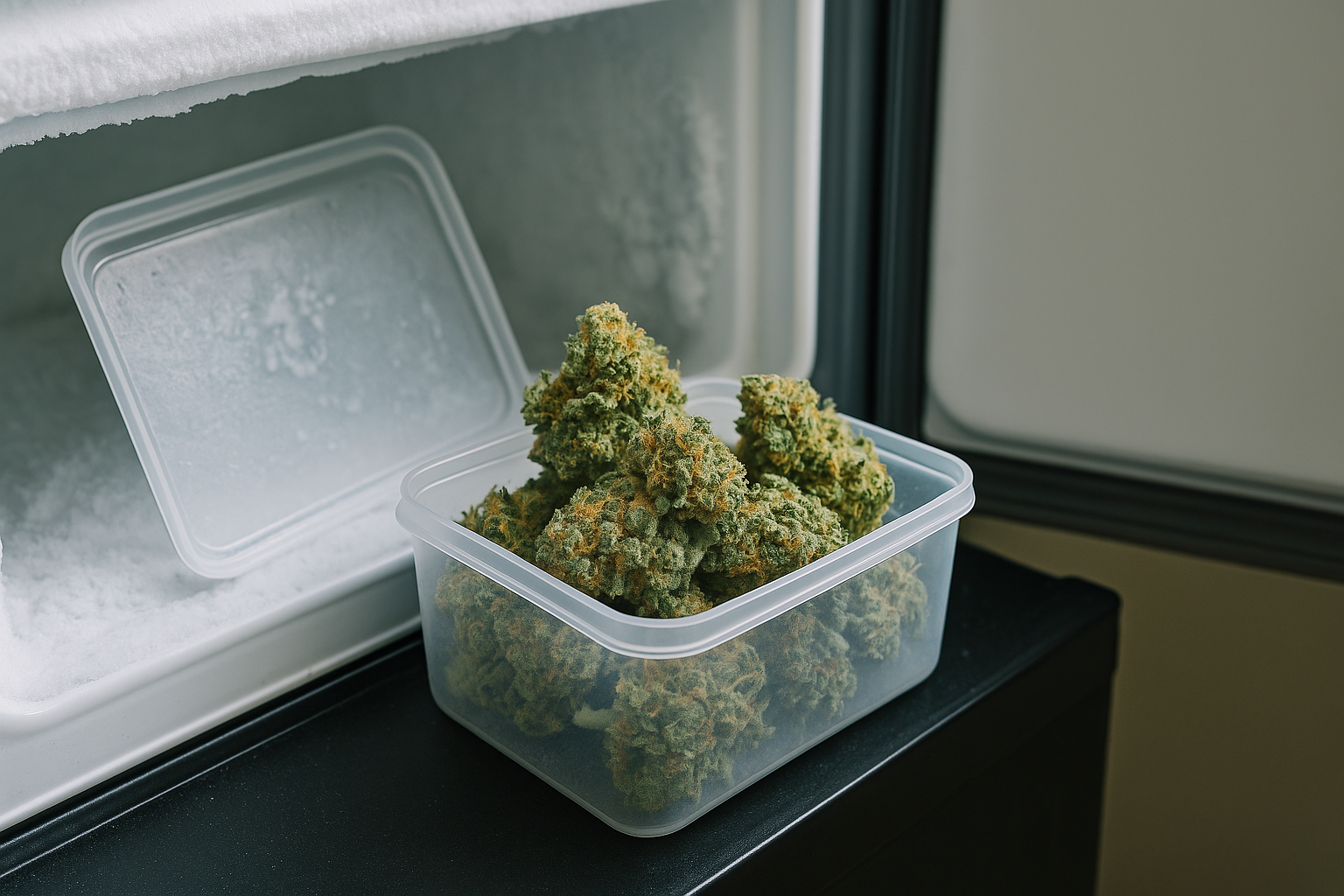
At Iberohemp, we understand that maintaining the quality of your CBD flowers and hash means controlling every stage of their shelf life, including cold storage. Knowing when and how to freeze cannabis is essential to preserve aroma, terpenes and the internal structure of the trichomes, preventing premature degradation. In this article, you will find clear and practical guidelines for preparing, freezing and thawing your buds with confidence, as well as recommendations on containers and optimal temperatures.
Signs that it is time to freeze your cannabis
Identifying the right time to freeze cannabis ensures that aromatic compounds and organoleptic properties remain intact. Before excess humidity or environmental heat begins to alter flavour profiles, it is advisable to assess its overall appearance. Freshly treated buds with uniform curing respond better to freezing; however, if you notice loss of firmness or a dull aroma, that is the ideal time to move to the freezer stage. Freezing cannabis on time ensures that each subsequent extraction or infusion makes the most of the raw material.
Aromas and textures that warn of degradation
A soft, fresh smell is a sign that your flowers maintain their integrity; when the fragrance becomes dull or loses citrus and herbal nuances, it is likely that the terpenes are beginning to break down. Likewise, to the touch, a dry and brittle bud suggests that curing has not retained the necessary flexibility. Faced with these signs, freezing cannabis can stop the progress of degradation, preserving tactile and aromatic qualities. Acting on time prevents the organoleptic experience from being reduced to a monotonous aroma and unpleasant textures.
Signs of excess humidity or oxidation
When cannabis accumulates moisture, trichomes run the risk of crystallising or even oxidising in the presence of oxygen. If you notice dark spots, early mould or a viscous appearance, rapid freezing slows the advance of microorganisms and quality loss. Similarly, oxidation darkens green tones and alters the flavour profile, so freezing cannabis properly helps maintain the original colour and prevent irreversible damage before possible processing.
Prior preparation: storage and packaging before freezing cannabis
Before freezing cannabis, a controlled storage phase is essential. We recommend a prior curing period of at least two weeks in glass jars, with brief daily openings to release residual humidity. After that period, each flower should be placed in airtight, air-free containers to minimise contact with humidity and oxygen. This preparation base prevents mould formation during freezing and optimises the preservation of critical terpenes.
Basic curing to maintain terpenes and trichomes
Curing removes excess water and allows trichomes to settle without breaking. After the initial harvest, hanging the buds in a ventilated space with a constant temperature (18–21 °C) is ideal. Once dry, transfer the flowers to opaque jars with airtight lids and open them briefly each day during the first week to balance internal humidity. This simple process ensures that, when freezing cannabis later, the trichomes retain their structure, preventing loss of aroma and visual potency.
Recommended container types: vacuum sealing vs airtight bags
To freeze cannabis without compromising its qualities, vacuum sealing is the most effective option: it removes air and reduces ice crystal formation. However, if you do not have a specialised machine, double-seal PE airtight bags also protect against moisture if the air is properly expelled before sealing. In both cases, labelling each package with the date and variety makes stock control easier.
Effective methods for freezing cannabis without losing quality
There are two freezing methods: fast and slow. The first involves lowering the temperature immediately using household freezers on their coldest cycle, while the second consists of reducing the temperature gradually. Although slow freezing can form more ice crystals on the surface, the fast method better preserves the internal structure of the bud. When freezing cannabis, prioritising speed minimises mechanical damage to trichomes and terpenes, preserving the organoleptic and visual quality of the raw material.
Fast freezing vs slow freezing
Fast freezing, by placing the product at the back of the freezer at a stable temperature of –18 °C or lower, solidifies the internal water without forming large crystals. In contrast, slow freezing, by exposing the buds to a gradual drop in temperature, risks generating microfractures in the trichomes and altering the aromatic profile. To keep the compounds intact, we recommend the fast method, as it reduces prolonged exposure to cold air and allows more even thawing.
Tips to avoid ice crystal formation
The key to freezing cannabis without crystallisation lies in avoiding sudden temperature changes. Vacuum sealing and airtight containers, combined with prior removal of excess humidity, reduce the risk of frost. In addition, keeping the freezer as stable as possible, without opening it frequently, prevents condensation from generating ice crystals on the buds. This way, each bud maintains its shape and its trichomes are not damaged by surface fractures.
How to thaw your cannabis for later use
The reverse process of freezing is just as important as cold storage. Thawing cannabis gradually prevents thermal shocks that could break trichomes or alter terpenes. Place the sealed container in the coldest part of your refrigerator for a few hours before moving it to room temperature. This way, the temperature change happens gently and without internal condensation. Once thawed, you can handle the flowers to prepare extracts or mixtures with our CBD oils.
Gradual thawing in a controlled environment
To preserve texture and aroma, remove the product from the freezer and leave it refrigerated (4 °C) for at least six hours. The sealed container prevents moisture from entering and avoids condensation on the surface of the trichomes. Only when the interior reaches refrigerator temperature should you remove it and open it carefully. This protocol ensures that the citrus, floral or earthy aroma of your buds remains unchanged and that the touch stays firm.
Gentle rehydration to preserve texture
If you notice some dryness after thawing, you can rehydrate your flowers with a small strip of damp parchment paper or a piece of fruit peel, without direct contact, inside the airtight container. This delicate trick adds moisture without soaking and restores the original flexibility of the buds. After 24 hours in that controlled environment, your flowers will be ready for any later use, with a pleasant texture and intact terpenes.
Common mistakes when freezing cannabis and how to avoid them
One of the most frequent mistakes is not removing the air before sealing the container, which causes freezer burn and surface damage. Another mistake is exposing the product to temperature fluctuations by opening the freezer frequently, encouraging frost formation. Also, skipping the prior curing stage results in overly moist buds, which can develop mould even below zero. To avoid these problems, make sure to cure correctly, use vacuum sealing or airtight bags and maintain a constant temperature.
Next steps: storing and preserving after freezing cannabis
Once the freezing and thawing cycle is complete, your next goal is stable storage that extends the shelf life of your buds. Keep the freezer at a constant –18 °C and check the seals from time to time. For daily or weekly portions, reserve small packages and leave the rest intact in the freezer. Likewise, alternate with other preservation methods, such as opaque containers in cool cupboards, if you plan long-term use without exposing all your stock to cold.
Temperature and humidity control in the freezer
Checking freezer stability is essential when freezing cannabis: a digital thermometer with continuous data will alert you to unexpected variations. Controlled internal humidity, around 40%, prevents frost formation and excessive dehydration of the buds. With a stable environment, your products will preserve trichome structure and terpene integrity for months.
Long-term storage alternatives
For those looking to complement freezer storage, airtight containers in cool, dark spaces, with their own desiccant, can be a viable method after well-executed curing. Vacuum-sealing kits also guarantee durable sealing without relying on permanent cold. This way, you diversify preservation options and reduce exclusive dependence on the freezer.
By following these freezing and storage tips, you will see how freezing cannabis is an effective strategy for preserving the quality and aromatic profile of your buds and CBD hash. However, it should always be done with a proper curing, packaging and thawing plan. At Iberohemp, we offer everything from premium flowers to CBD oils, prepared for any preservation method you choose. If you are looking for products ready to freeze or ideas for your extractions, visit our store and discover how we can help you keep the freshness of your raw material intact. Dare to optimise your storage today.



Leave a comment
This site is protected by hCaptcha and the hCaptcha Privacy Policy and Terms of Service apply.